Gerrie M. Obi, MSN, APRN, AGPCNP-BC, CPSN, ISPAN-F
After many years in aesthetic medicine, I have learned that good judgment is just as important as technical skill. Experience brings new perspective and an understanding of the balance, restraint, and the responsibility that comes with altering someone’s appearance. Many patients come into a consultation with the same concern: they want to look refreshed, not “weird,” and they want to remain recognizably themselves. That concern guides my approach. Every recommendation I make is thoughtful, appropriate, and rooted in what truly serves the individual, not trends or excess.

Having practiced in the field of aesthetic medicine for many years, now that I am going through my own aging process, I find it takes a lot of restraint to resist being overtreated. I often tell my patients that if they think their injector looks overdone or weird, they should find a different injector, because that person may not realize they are overtreated and therefore will not be a conservative injector for them.
I was fortunate to have started in this specialty when I was young. Over the years, I have seen many providers and patients who, in my opinion, were overdone, overpulled, and overcorrected. Seeing these individuals left me with a strong sense of always wanting to be conscientious and conservative and to do my best to avoid this overdone appearance in myself as well as in my patients.
The Initial Consultation
The initial consultation with a new patient is a crucial time. As an injector, I must pay careful attention to the patient’s verbal cues. The fear of being overcorrected is one cue, but on the other spectrum are the patients who have unreal expectations or want additional injections when they are already overcorrected. It is easy for me to have a discussion with a conservative patient. I advise them to take it slow and, if they are in doubt, to wait until they are ready. Educating and giving them accurate information about the treatment, and then letting my patients do their own research has been the best solution for our practice. I provide an aesthetic treatment care plan that addresses what can be done to achieve their desired goal(s) emphasizing the ability to stop at any stage of the process until they are satisfied with the outcome.
The more difficult conversation I sometimes must have with my patients is recognizing unrealistic expectations and knowing how to teach our patients about what is appropriate and achievable. Social media plays a big role in producing unreal expectations in patients. I often hear phrases such as “I saw this woman on Instagram…” or “Did you see that gal on TikTok?” Because of the use of filters, people posting photographs on social media look almost flawless. This generates unrealistic standards of beauty that the patient may not be able to achieve, and causes the patient to be dissatisfied with their body and to have a poor self-image.
Avoiding Procedures Due to Perception Drift
The goal of an aesthetic treatment plan should be to preserve the patient’s individual and natural beauty. Unfortunately, patients who have had multiple procedures may not recall what they looked like before receiving any cosmetic enhancements. As a result, it is not unusual for patients to return for additional treatment. Frequently, because they do not see the changes or enhancement from their baseline photograph, they are looking for additional procedures in the previously treated area. This is referred to as perception drift (Sola & Fabi, 2019). Fortunately, this is usually a temporary shift in one’s perception of their looks caused by the patient literally forgetting what they looked like before the procedure. This drift occurs because our brains adjust so quickly to our “new face”.
If our patient’s expectations and goals are significantly out of reach, it is our responsibility to tell them that their ideals are outside of the norm and to explain why their desire to have a particular procedure will not give them the result they are seeking.
Watching out for Body Dysmorphic Disorder
According to a study by Bouman et al. (2017), a patient’s preoccupation with a perceived appearance flaw is the main feature of body dysmorphic disorder (BDD). Although BDD is a contraindication for cosmetic or aesthetic treatment, the researchers found that most patients with BDD seek and often undergo some sort of cosmetic procedure. The researchers interviewed active plastic surgeons and dermatologists and found that approximately one in 50 patients have some level of BDD. As medical providers and plastic and aesthetic nurses, it is our responsibility to recognize patients with BDD and to use our medical and nursing judgment appropriately when determining whether to treat or not treat.
Patients with BDD are inclined to be fixated on their appearance, resulting in anxiety and stress, and causing them to undergo quick-fix surgical procedures with the hope of being pleased with the way they look after the procedure. Even though these “fixes” do not actually help with or address the underlying psychological problem, the patient will usually find another area of concern to focus on. When interviewing and evaluating new patients, plastic and aesthetic nurses must understand that this type of behavior is a major clue for identifying patients with BDD. Likewise, reviewing the patient’s medication list for antianxiety medications can also serve as a screening tool for identifying patients with BDD.
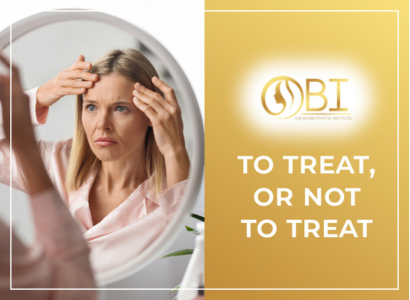
When treating patients with perception drift or BDD, I usually give them a face mirror and ask them to look in the mirror and tell me what they would refresh if they had a magic wand. When I hear them express unrealistic expectations, I explain that there is no magic wand, and I do not have the ability to perform magic. Then we discuss a realistic look based on their anatomy and what is appropriately achievable for them based on their “desired look”.
When you must refuse treatment of a patient with BDD, it can be difficult and awkward for both the provider and the patient. However, these conversations can become less awkward after realizing I am saving the patient from undergoing a procedure that is not in their best interests. As a medical provider, I take an oath to do no harm. Performing a procedure on a patient that is harmful or inappropriate for them is unethical.
Beyond Beauty: Doing What’s Right for Every Patient
At the end of the day, our responsibility is to act in the patient’s best interest. Ethical practice means being honest, prioritizing safety, and recommending treatments only when they are appropriate and truly beneficial. Trust is built when patients know their provider is guided by professional judgment rather than external pressures. Not every request requires a procedure, and part of practicing responsibly is having the confidence to say no when treatment is not the right choice. In my experience, patients value and respect this level of care, and it forms the foundation of a strong, lasting provider-patient relationship.